
FACIAL PARALYSIS & FACIAL NERVE REANIMATION
Restoring Your Smile,
Restoring Your Confidence
Dr. Amit Kochhar has dedicated his career to patients with
Facial Paralysis. His expertise in this field is unmatched.
For patients and families facing facial paralysis, finding the right surgeon changes everything.
Facial paralysis is more than a medical condition. It affects how you communicate, how you connect with others,
and how you see yourself. The inability to smile, close your eye, or show emotion to the people you love can feel
profoundly isolating. Many patients spend months — sometimes years — searching for answers, seeing multiple
physicians, and wondering whether anything can truly help.
If that’s where you are right now, you’ve found the right place.
Dr. Amit Kochhar is among the most experienced facial reanimation
surgeons in the United States — with over 10 years of specialized
practice and more than 1,000 facial paralysis patients treated.
He sees patients from across California and the western United States at his practice
in Los Angeles. He has offices in Santa Monica, Brentwood, and Burbank.
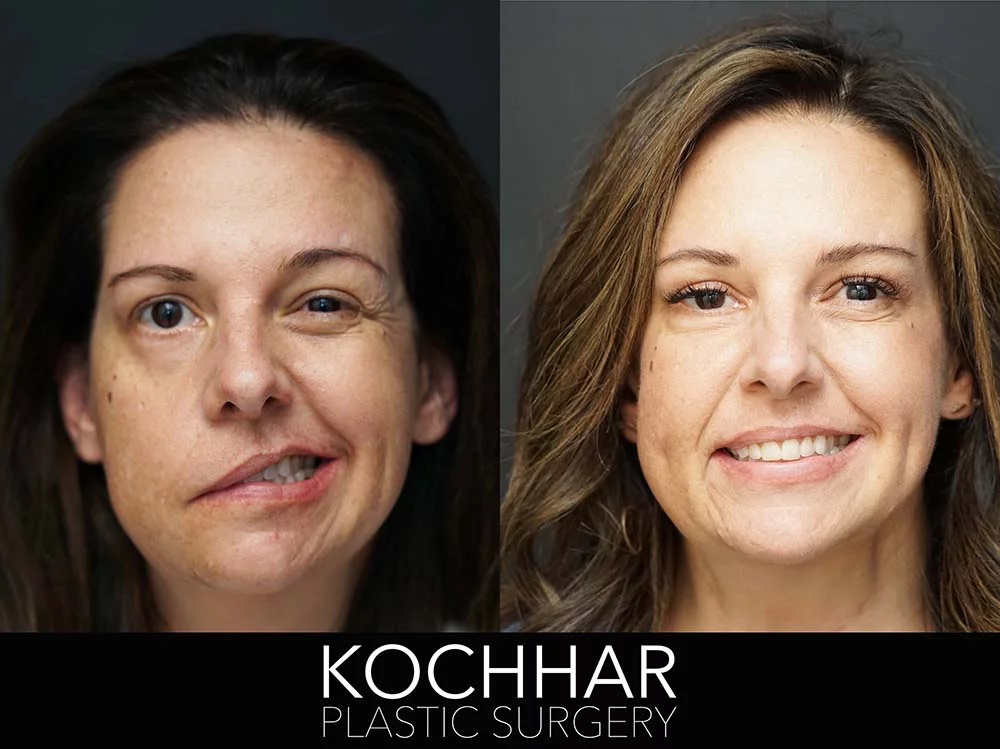
6-MONTH POST-OP 5-7 TRANSFER

TEMPORALIS TENDON TRANSFER
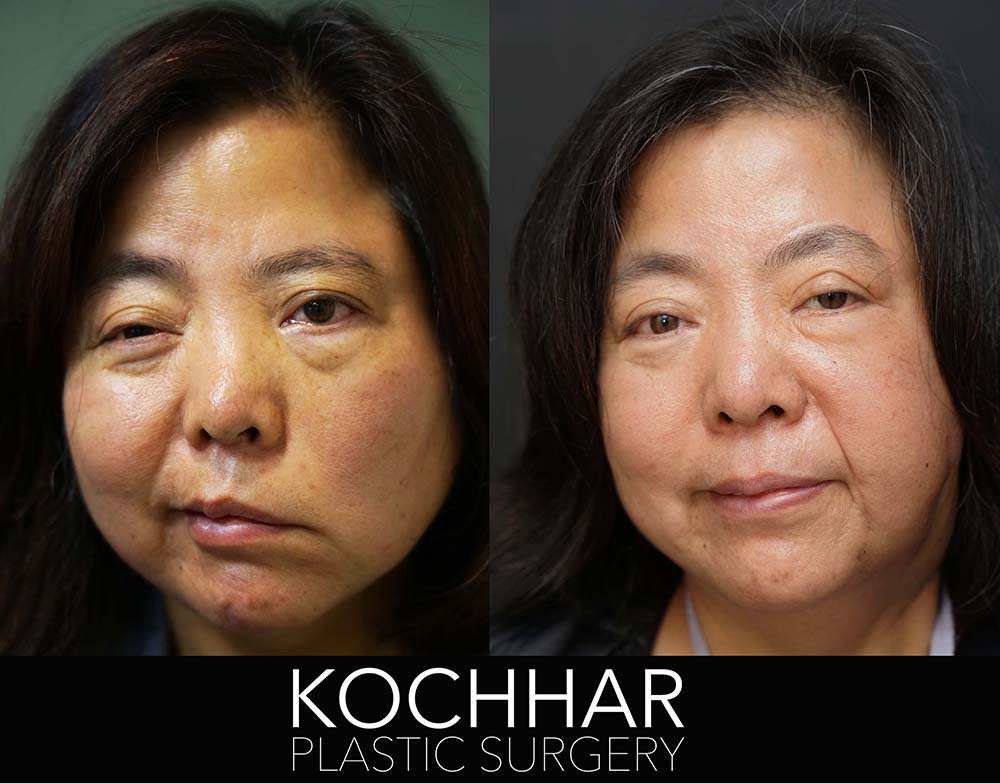
1 YEAR RADICAL PAROTIDECTOMY RECONSTRUCTION
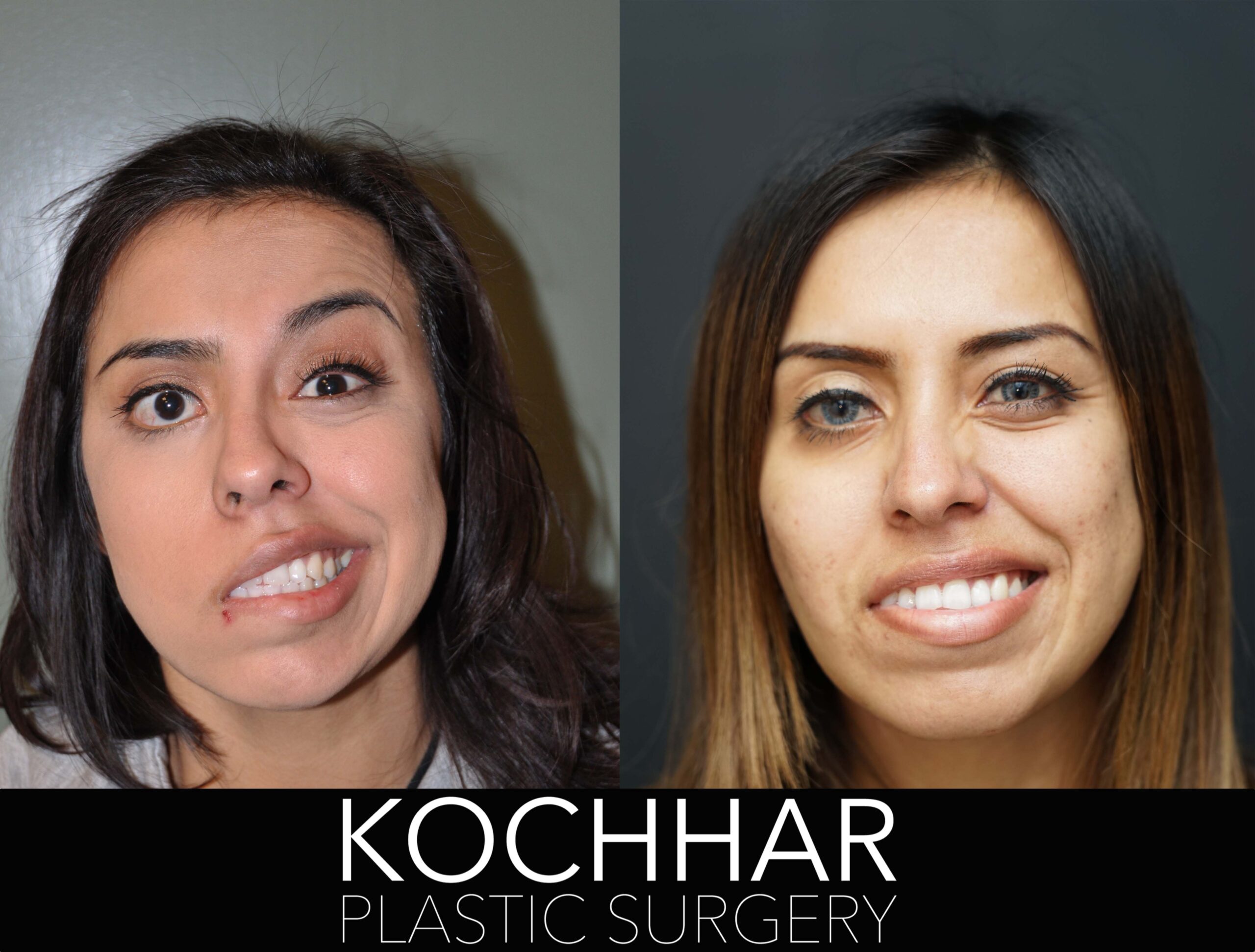
3 YEAR POST-OP COMBINATION 5-7 |12-7 NERVE TRANSFER
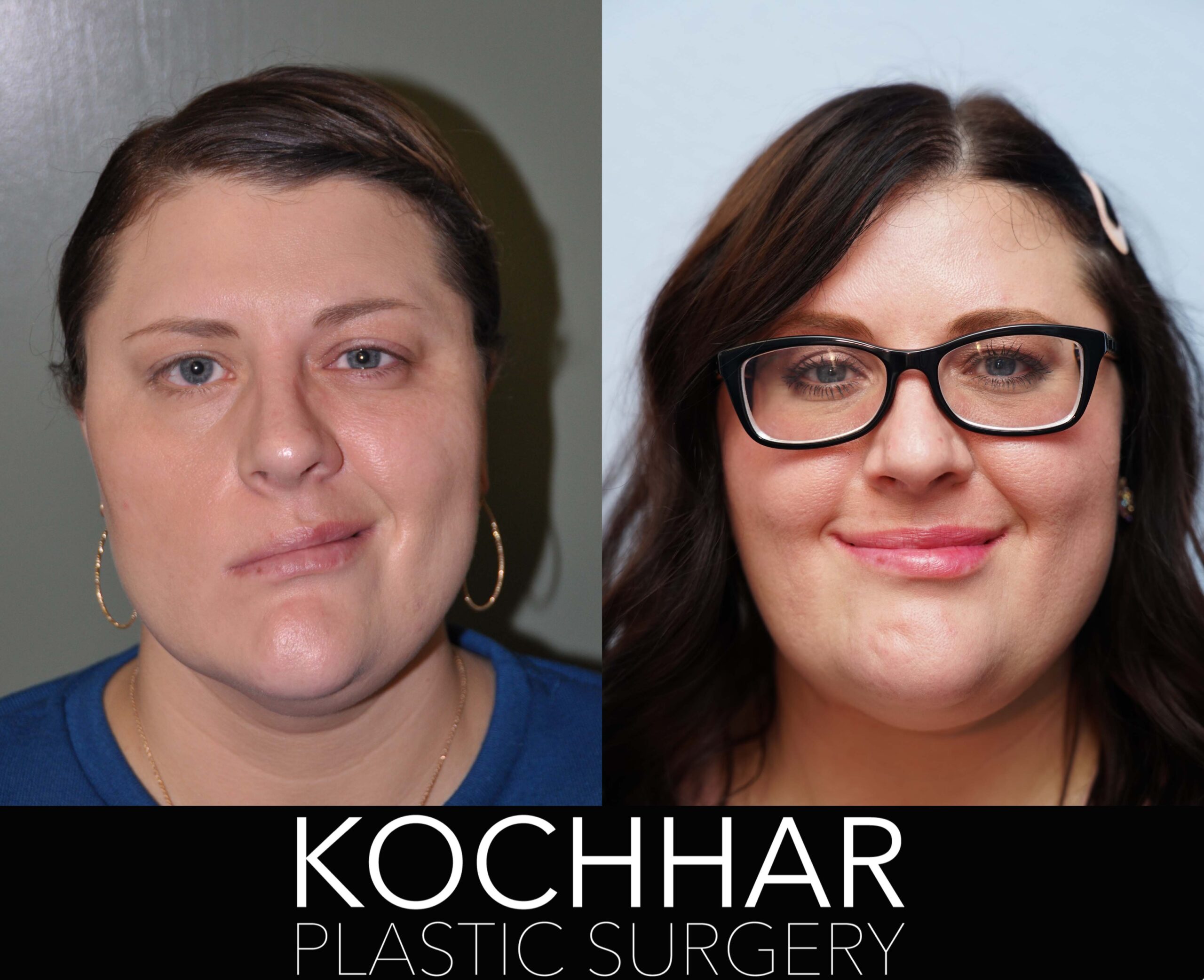
3-YEAR POST-OP 5-7 | 1-7 NERVE TRANSFER SMILE
Static Procedures
Static procedures do not lead to active purposeful movement. However, static facial reanimation plays an essential role in the treatment of facial paralysis and should not be overlooked. Static facial reanimation relies heavily on elevation and positioning of several key areas on the face and is often performed in combination with dynamic procedures, or those that do lead to purposeful movement.
Static suspension is often performed on the following areas:
- Elevating the droopy eyebrow to prevent visual field obstruction and to create symmetry with the opposite side
- Elevating the nasal ala and midface to improve breathing and repair collapse of the external nasal valve which is affected by facial paralysis
- Elevating the droopy oral commissure of the affected side to provide immediate restoration of symmetry. Elevation of the oral commissure not only provides symmetry but can also make it easier to speak, eat and drink on the affected side. This can be done in combination with nerve reinnervation or muscle transfer to correct asymmetry while waiting for the new nerves and muscles to activate.
Dynamic Rehabililtation
Dynamic rehabilitation is required to restore facial tone, symmetry and purposeful synchronized facial movements.
Various options exist for dynamic facial nerve reanimation that includes:
- Nerve grafting
- Crossover techniques
- Nerve transfer or transposition
- Local muscle/tendon transfer
- Free muscle transfer
Nerve grafting for acute facial nerve injury
For reversible injuries, nerve grafting is a frequently used technique to repair “gaps” in the facial nerve. This requires taking a nerve from a different part of the body (i.e. sural sensory nerve) and then placing it between the 2 cut facial nerve ends to reinnervate the facial muscles.
Nerve grafting is most often performed after acute facial nerve injury (e.g. radical parotidectomy with nerve sacrifice, traumatic injury, or removal of an acoustic neuroma with known facial nerve transection). Nerve grafting is best performed at the time of injury or within the first 72 hours of nerve injury so that a nerve stimulator may be unable to identify the cut ends of the facial nerve. Therefore it is not a recommended option for the management of chronic facial paralysis.
Cross facial nerve grafting
For treatment of chronic facial paralysis, we use the cross facial nerve graft, nerve transfer/transposition and muscle transfer techniques.
The technique of cross facial nerve grafting with a donor nerve (e.g. sural nerve) is a useful technique when the main trunk of the facial nerve cannot be accessed or is beyond repair and the remaining peripheral branches in the face are spared. Cross facial nerve grafting alone is most effective in cases with denervation time of less than 6 months.
In patients with facial paralysis injury greater than 6 months, the cross facial nerve graft alone is not believed to be as effective and therefore is usually done in combination with a strong motor nerve transfer/transposition at the same time. Typically this involves using the nerve to masseter or the hypoglossal nerve as well.
Nerve transposition
For reversible facial nerve injury, nerve transfer/transposition involves using a different motor nerve to reinnervate the facial nerve and thus stimulate the facial muscles. Most commonly, the nerve to the masseter and hypoglossal nerve are used. The 5-7 and 12-7 transfer procedures do not create mimetic smiles that are synchronized to the opposite, normal face, however, with the addition of biofeedback and neuromuscular retraining, patients may achieve coordinated facial movements.
Loco-regional muscle and tendon transfer
When irreversible injury of the facial nerve occurs, the muscles of the face atrophy and are no longer able to function properly.
Therefore, transfer of new muscle may be required for dynamic facial reanimation. Historically, the temporalis muscle was transferred from the scalp down to the mouth to create dynamic movemebt of the lower face (i.e. smile). However, this would often lead to a defect in the side of the scalp, and excess bulk in the cheek that was non anatomic. Modification to this procedure have taught us that we do not need the entire temporalis muscle to create a smile, but can use the temporalis tendon.
Furthermore, this can be done in a minimally invasive fashion. Similar to the 5-7 nerve transfer, the temporalis tendon transfer allows for symmetry at rest, and formation of a smile when making a chewing motion on the affected side. While it does not lead to a synchronized, mimetic, smile, temoporalis tendon transfer can translate into a spontaneous controlled smile with intensive neuromuscular retraining and physical therapy.
Gracilis free flap (microneurovascular) procedure
The gracilis free flap is the gold standard procedure for dynamic facial reanimation to produce synchronous, mimetic facial movement in patients with irreversible chronic facial paralysis. It may be performed in 1 or 2 stages and requires a surgeon who is technically skilled in microsurgery. The procedure involves transferring a muscle from the thigh (gracilis) with its arterial and venous blood supply, and its nervous input to the face. The gracilis muscle is uniquely suited for this procedure due to its size, shape, length, reliable blood supply, and long single motor nerve (obturator nerve). There is minimal morbidity to the thigh and the scar is easily hidden as well.
The traditional gracilis free flap for facial reanimation involved a first stage cross-face nerve graft followed by the free flap 6-12 months later. However, single stage gracilis free flaps powered by the nerve to masseter also provide excellent and predictable results, however, mimetic smile is less likely as one must bite or chew to initiate smile. A third option is to perform dual innervation of the gracilis muscle using both the cross face nerve graft and the nerve to masseter.
Management of the Eye
For all patients with facial paralysis, appropriate early eye care is essential to prevent corneal injury and infection that can lead to blindness. All patients should use artificial tears, eye lubrication, moisture chambers, and protective eye taping.
Patients with the following symptoms are at higher risk for injury to the eye:
- In ability to close your eye completely
- Reduced corneal sensation
- History or presence of dry eye
- More pronounced, larger eyes
Upper eyelid weight placement
Upper eyelid weights (platinum typically) may be surgically placed under the eyelid skin to assist with eyelid closure. For patients with the possibility of facial nerve recovery, surgically placed eyelid weights may be removed if function returns or can stay indefinitely.
Lower eyelid repositioning
If the lower eyelid becomes too relaxed after facial paralysis, it may pull away from the eye. This is called paralytic ectropion and can lead to incomplete closure, excessive tearing and increase the risk of injury. Shortening of the lower eyelid can be performed under local or general anesthesia. This procedure is routinely performed with upper eyelid weight placement to improve eyelid closure and protect the eye from exposure related injury.
Education
Since 2024, Dr. Kochhar has led the annual PNI Facial Nerve Course in Santa Monica, California. This course offers something for providers of all levels; surgeons in practice, resident and fellows in training, and therapists who manage these patients. The course takes place over 2 days in early March and offers one full day of didactics and a second day that focuses on rehabilitation and anatomic dissection.
Previous guest speakers have included Dr. Patrick Byrne, Dr. Tessa Hadlock, Dr. Babak Azizzadeh and Dr. Kofi Boahene. These are some the world leaders in the management of Facial Paralysis. True to his mission as an educator, Dr. Kochhar’s goal is to bring leading surgeons and therapists from across the country together to share knowledge and experiences so that everyone can better manage their complex patients.
Frequently Asked Questions About Facial Paralysis Treatment
Facial paralysis is the loss of voluntary muscle movement on one or both sides of the face, caused by injury or dysfunction of the facial nerve. The most common cause is Bell’s palsy — a temporary condition that resolves on its own in most patients. Other causes include acoustic neuroma (a benign tumor near the ear), parotid gland tumors, trauma, stroke, infection (such as Ramsay Hunt syndrome), and congenital conditions like Möbius syndrome. Each cause requires a different treatment approach, which is why seeing a specialist with broad experience across all types is important.
This is one of the most important questions to answer early. Temporary (reversible) paralysis means the facial nerve and muscles are still intact and capable of recovery — treatment focuses on protecting the nerve and supporting natural healing. Permanent (irreversible) paralysis means the facial muscles have lost their nerve supply and have begun to atrophy — treatment focuses on transferring new muscles or nerves to restore movement. Diagnostic testing including EMG (electromyography) can help determine which category applies to you. Dr. Kochhar performs this evaluation as part of every new patient consultation.
You should seek a specialist consultation if: your facial paralysis has not shown improvement after 3 months; you have been told your paralysis may be permanent; you are experiencing synkinesis (involuntary facial movements); you are having difficulty closing your eye completely; or you want to explore surgical options for restoring facial movement. Earlier evaluation generally leads to better outcomes — many surgical options are most effective when performed within a certain window of time from the nerve injury.
Synkinesis is an abnormal pattern of facial movement that can develop after facial nerve injury — for example, your eye involuntarily closes when you try to smile, or your neck tightens when you blink. It occurs when nerve fibers regrow in disorganized patterns. Treatment options include targeted Botox injections to quiet the overactive muscles, specialized facial physical therapy with neuromuscular retraining, and in some cases surgical intervention. Dr. Kochhar develops an individualized treatment plan for every synkinesis patient based on which areas are most affected.
The right surgical approach depends on how long you’ve had paralysis, whether your facial muscles are still functional, and your personal goals. Options include nerve grafting (repairing the facial nerve directly), nerve transfer procedures (using a nearby nerve such as the masseter or hypoglossal nerve to power the facial muscles), temporalis tendon transfer (a minimally invasive procedure to restore smile movement), and gracilis free flap surgery (the gold standard for restoring a spontaneous, synchronized smile in patients with irreversible paralysis). Static procedures — which improve symmetry and appearance without creating movement — are also frequently used in combination with dynamic procedures.
The gracilis free flap is widely considered the gold standard procedure for restoring dynamic, synchronized smile movement in patients with irreversible facial paralysis. It involves transferring a small muscle from the inner thigh — along with its blood supply and nerve — to the face, where it is connected to blood vessels and nerves to power a new smile. The procedure requires microsurgical expertise. Not every patient is a candidate — the best outcomes are generally seen in patients whose facial muscles are no longer functional and who are in good overall health. Dr. Kochhar will determine whether this procedure is appropriate for you during your evaluation.
Eye protection is the most urgent priority for any patient who cannot fully close their eye. Inability to close the eye completely puts the cornea at risk of dryness, abrasion, and infection that can lead to permanent vision loss. Dr. Kochhar recommends all such patients use preservative-free artificial tears frequently throughout the day, lubricating eye ointment at night, moisture chambers or protective eyewear, and taping the eye closed during sleep. Surgical options for longer-term protection include platinum weight placement in the upper eyelid and lower eyelid repositioning procedures.
In many cases, yes — particularly for reconstructive procedures performed to restore function following a documented medical cause such as tumor removal, trauma, or a neurological condition. Coverage varies significantly by insurance plan and the specific procedure. Dr. Kochhar’s team will help you understand your insurance benefits and navigate the prior authorization process. Cash-pay options and financing are also available.
Recovery timelines vary significantly depending on the procedure. Static procedures typically have recovery periods of 1–2 weeks. Nerve transfer procedures involve a waiting period of several months before new nerve function begins to appear, with continued improvement over 12–18 months. Gracilis free flap surgery involves an initial hospital stay of a few days, followed by weeks of healing and then months of neuromuscular retraining with a physical therapist. Dr. Kochhar will give you a realistic timeline specific to your planned procedure during your consultation.
You can reach our office by phone at (310) 477-5558 or submit a consultation request through our contact page. Dr. Kochhar sees new facial paralysis patients from across Los Angeles, the greater Southern California region, and the western United States. Telemedicine consultations are available for patients traveling from out of state who would like an initial evaluation before visiting Los Angeles in person.